Thursday, August 21, 2008


Wednesday, August 13, 2008
For those of you in New York, a few handpicked recommendations for the weekend:
Friday:
Craig Richards doesn't travel stateside as much as we'd like. It's understandable, though, because as a weekly resident at London's Fabric, he gets to play music on one of the world's best sound systems. So when he does make it to these shores, it is a special occasion — one that brings out even the most jaded electronic-music aficionados. Richards doesn't follow the file-sharing, right-clicking herd when it comes to sounds and styles. Rather, he has a nose for under-the-radar cuts and producers, does the record bin due diligence the old-fashioned way, and has a masterful touch when it comes to arranging what he finds.
Sunday:
Barriers to DJing are getting lower (read: iPods, blog house). As such, it's important to remember that playing records can be an art form. Nicky Siano, who's recently re-emerged in NYC via a successful residency at Santos, was one of the most influential figures in New York's early dance scene. Through his curation of the Gallery and early DJ sets at Studio 54 and Mancuso's Loft, Siano honed and refined a sound rooted in house and disco with soulful emotional resonance. Today, he hits the Yard for one of the summer's best parties, the appropriately titled Sunday Best.
Friday:
Craig Richards doesn't travel stateside as much as we'd like. It's understandable, though, because as a weekly resident at London's Fabric, he gets to play music on one of the world's best sound systems. So when he does make it to these shores, it is a special occasion — one that brings out even the most jaded electronic-music aficionados. Richards doesn't follow the file-sharing, right-clicking herd when it comes to sounds and styles. Rather, he has a nose for under-the-radar cuts and producers, does the record bin due diligence the old-fashioned way, and has a masterful touch when it comes to arranging what he finds.
Sunday:
Barriers to DJing are getting lower (read: iPods, blog house). As such, it's important to remember that playing records can be an art form. Nicky Siano, who's recently re-emerged in NYC via a successful residency at Santos, was one of the most influential figures in New York's early dance scene. Through his curation of the Gallery and early DJ sets at Studio 54 and Mancuso's Loft, Siano honed and refined a sound rooted in house and disco with soulful emotional resonance. Today, he hits the Yard for one of the summer's best parties, the appropriately titled Sunday Best.
Sunday, August 10, 2008


Saturday, August 09, 2008
Some bits and bobs:
-The most mammy CNN headline ever: "Russian tanks and troops on way to troubled region."
-A good Fader article by Jace Clayton aka DJ/Rupture on the new cumbia scene. For a taste, check the Bersa Discos site, co-run by my old friend Gavin Burnett (DJ Oro11). Tropical, latin and psychedelic is right.
-Been digging out from a promo backlog lately and I'm surprised to see a lot of familiar old names: The Orb, Bomb the Bass, Red Snapper and Nightmares on Wax. Need to digest properly these but the Bomb the Bass record already sounds quite promising.
-My friends Anna and Todd randomly stumbled into a moving sale in Williamsburg the other day. The vendor? None other than William Basinski, creator of one of the most beautiful things I've ever heard, The Disintegration Loops.
From Hauntedink:
Here are some photos from their adventure, taken by Laura Heyenga.


This is my favorite loop, the first track in the fourth series. Music for swaying kelp beds.

William Basinski- Dlp6
-The most mammy CNN headline ever: "Russian tanks and troops on way to troubled region."
-A good Fader article by Jace Clayton aka DJ/Rupture on the new cumbia scene. For a taste, check the Bersa Discos site, co-run by my old friend Gavin Burnett (DJ Oro11). Tropical, latin and psychedelic is right.
-Been digging out from a promo backlog lately and I'm surprised to see a lot of familiar old names: The Orb, Bomb the Bass, Red Snapper and Nightmares on Wax. Need to digest properly these but the Bomb the Bass record already sounds quite promising.
-My friends Anna and Todd randomly stumbled into a moving sale in Williamsburg the other day. The vendor? None other than William Basinski, creator of one of the most beautiful things I've ever heard, The Disintegration Loops.
From Hauntedink:
William Basinski's four-disk epic, The Disintegration Loops, was created out of tape loops Basinski made back in the early 1980s. These loops held some personal significance to Basinski, a significance he only touches on in the liner notes and we can only guess at. Originally, he just wanted to transfer the loops from analog reel-to-reel tape to digital hard disk. However, once he started the transfer, he discovered something: the tapes were old and they were disintegrating as they played and as he recorded. As he notes in the liner notes, "The music was dying." But he kept recording, documenting the death of these loops.
Here are some photos from their adventure, taken by Laura Heyenga.


This is my favorite loop, the first track in the fourth series. Music for swaying kelp beds.

William Basinski- Dlp6
Wednesday, July 30, 2008
I tend to focus on a certain kind of music on this blog, but I've been in the mood to get a bit out of my strike zone this week.
As such, I got a nice email from my pal Nick Barat (aka Catchdubs). He tipped me off on a few new mixes and an interview. Check one of 'em here. Also, if you haven't heard what he's up to with Fool's Gold, get on it.
As such, I got a nice email from my pal Nick Barat (aka Catchdubs). He tipped me off on a few new mixes and an interview. Check one of 'em here. Also, if you haven't heard what he's up to with Fool's Gold, get on it.
Tuesday, July 29, 2008
Wednesday, July 23, 2008

Sunday, July 20, 2008

Circlesquare are one of my favorite bands, hands down. Led by Vancouver-raised and Berlin-based Jeremy Shaw, the band first released the beautiful Distance After EP on the now-defunct Output label. There's a new album in the hopper, due for release on K7 in the coming months.
This track is a good example of the sound. Pitch-bent guitar tones, swollen sub-bass and beautifully detached, Klonapin glazed vocals:
Circlesquare- Sub Reminisce (Deeper)
Also, check the video:
Circlesquare - Sub-Reminisce from Bienvenido Cruz on Vimeo.
Saturday, July 19, 2008
The recent Monocle Q&A with Alain de Botton is one of the most insightful interviews I've seen in some time.
To watch it, go to the iTunes store, select Podcasts and search for "Monocle." It will be one of the more recent installments.
Enjoy.
Update: Here is a direct link, kindly provided by Naveen.
To watch it, go to the iTunes store, select Podcasts and search for "Monocle." It will be one of the more recent installments.
Enjoy.
Update: Here is a direct link, kindly provided by Naveen.

It's been another busy month. I've been in Chicago, Tokyo, Hong Kong, San Francisco and just got back to homebase in New York. If you feel so inclined, check the photos here.
Tokyo
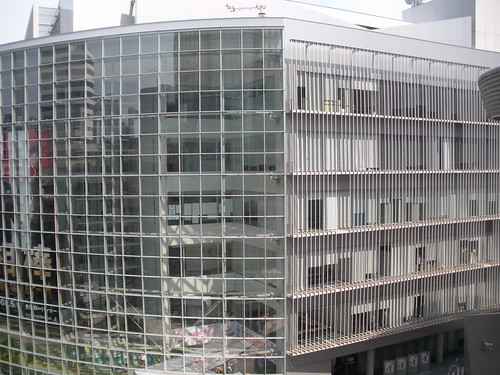
Tokyo has leapfrogged over Copenhagen and Buenos Aires as my favorite global city. After a few recent visits, I'm starting to get a better feel for everything and can't help but be amazed at how efficiently things run. The Japanese have an incredible eye for detail -- ranging from how your coffee is presented, to general infrastructure, to the incredible new mixed-use Marunouchi development under construction around Tokyo station. Also, as anyone who's spent any time in Japan has undoubtedly seen, the city is full of incredibly innovative retail at a density I've never seen. I can't help but wonder why some of my favorites (Beams, Tomorrowland, United Arrows) haven't been exported to other markets. If you have NRT on your itinerary in the coming weeks or months, shoot me an and I'll be happy to give you some tips and insights. Also, I'd love any other ideas for my next trip.
Hong Kong
Despite an unfortunate bout of food poisoning, Hong Kong was an inspiring experience as well. I divided my time between the chaos of Causeway Bay and the spiraling, Blade Runner-styled architecture of Central. I found it to be a city of really interesting contrasts. You could buy a pair of Tod's loafers two blocks away from open air markets where fish hearts were still beating on the table. Yet, despite this, the city runs incredibly well: a slick transport hub brings you from HKG into the Central station in around 20 minutes, and the subway system (cheap at less than a dollar a ride) is clean and reliable.
San Francisco
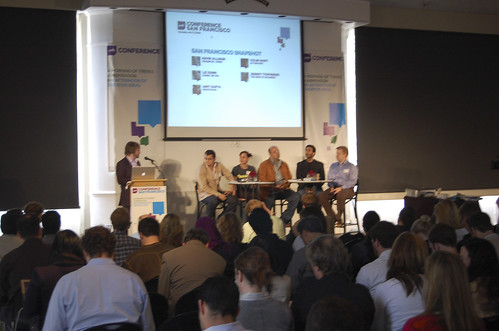
After two days turnaround in New York, I was off again to San Francisco to moderate a panel at the PSFK conference. The topic was San Francisco culture as it pertained to business, culture, and technology. I'm pleased to say it went incredibly well. Core77 had some nice things to say here.
A few things I enjoyed over the past month-- some old, some new:
Music:
Recloose- Cardiology
Sven Weisemann- Floating Dub
Shuttle358- Calty
Mono Junk- Channel B
The Staple Singers- Uncloudy Day
Marz- Wir Sind Hier
Benga- Diary of An Afro Warrior
Reading:
The Post-American World- Fareed Zakaria
Falling Man- Don DeLillo
The Blair Years- The Alastair Campbell Diaries
Buying In- Rob Walker
Places, things or people that are great in general:
Peninsula Tokyo
Sushi-Dai at Tsukiji fish market
IFC building in HK
Thomas and the incredible staff at the Landmark Mandarin in HK for helping coordinate a 3:30 am hospital visit for my brother. (He's now A-OK).
The view of SF from A. Rietz's balcony
Jin Ju Korean Restaurant in Chicago
Wednesday, July 16, 2008

Saturday, July 05, 2008
Feast and Famine
From the ages of 16 to about 24, I spent every cent of disposable income on an addiction.
Black and tactile, with reassuring heaviness and warmth, everything about vinyl fascinated me. Like many obsessives, I dug through record bins and yard sales; I would scour e-Bay for old Scott Walker records, check bulletin boards for rare Mo’ Wax “Headz” compilations and order countless drum and bass 12’s from shops in London -- exorbitant shipping fees and all.
Many others still share this addiction. Vinyl sales – spurred by DJ culture, audiophiles, and perhaps for the reasons I’m about to outline – are actually up in the UK today.
Thinking about this act of collecting and experiencing vinyl as a physical manifestation of sound, I started considering the current climate of digital media, and how, when records are reduced to easily distributed files -- intangible 1’s and 0’s -- content can be devalued.
It’s almost too easy to overdose, flailing softly amid notifications and options, losing precious moments in the white noise of constant information.
We live in a time of tremendous access. Obscure film and television clips previously relegated to memory and subconscious are now on YouTube. Music comes from peer-to-peer networks, connected friends and, often as a last resort, through legitimate download sites.
In many ways, this is great. Palates are becoming more and more refined and the barrier to hearing new sounds and genres is lower than it's ever been. As a result, people have developed more of an open mind. Self-described fans of indie rock, who might have never listened to anything urban and/or electronic ten years ago, are now checking out Dubstep nights. Shoegazers are discovering freak folk, dub-techno and countless other genres with ease – and in ways they inform one and other. This is all incredibly positive.
But, in the wake of this digital feast, there is a famine. Infinite accessibility and portability means many people aren’t experiencing music as deeply as they once did. I suffer from chronic iTunes attention deficit syndrome, clicking through the best bits of several songs and mixes throughout the course of an hour. It’s a forgotten luxury to let an album play through and listen with undivided attention.
I think back to the time when I ordered Sigur Ros’ Agaetis Byrun from Fatcat’s mailorder site and spent much of a year drinking it in, learning every little nuance and texture of the album. Later I played Radiohead’s Kid A over and over so many times on my headphones that I still recall every seamless segue between songs.
Skip forward to today. I recently declared promo bankruptcy. I’m fortunate enough to receive piles of free music in my mailbox, digital zip files of new singles, and enthusiastic recommendations beamed from friends over instant messenger. Inspired in part by the late John Peel, for several years I tried to give everything a listen -- however cursory -- to make sure I wasn’t missing out on something truly special. But in this effort, combined with personal music buying, mix-making and live shows, I suffered a figurative death from a thousand cuts.
For a fleeting moment, I lost all perspective. I didn’t know what was good or bad anymore. The constant onslaught of new music turned into a pink haze of static—as overwhelming as the first time I heard Loveless, but nowhere near as sublime. The consumption of music had lost its pleasure.
To remedy this, I had to force myself to remember everything that goes into creating a single piece of music: the nuances of writing and recording, the creative tension, frustration, aspiration, and the seemingly simple goal of making tones sit nicely together in a mix. The mastering, re-touching, editing and hiss of the tape reel. The magic when things congeal into something special. All of the things that happen behind the new barrier to entry, that little icon you click on your desktop, the bubble mailer with a promo CD in the mailbox.
Things are better now. The panic has subsided. But I learned a valuable lesson that’s starting to seep into other areas of my life: Take your time. Respect the craft and remember the process. Put a record on the turntable and listen all the way through. Enjoy the permanence of physical things and what goes into their creation.
From the ages of 16 to about 24, I spent every cent of disposable income on an addiction.
Black and tactile, with reassuring heaviness and warmth, everything about vinyl fascinated me. Like many obsessives, I dug through record bins and yard sales; I would scour e-Bay for old Scott Walker records, check bulletin boards for rare Mo’ Wax “Headz” compilations and order countless drum and bass 12’s from shops in London -- exorbitant shipping fees and all.
Many others still share this addiction. Vinyl sales – spurred by DJ culture, audiophiles, and perhaps for the reasons I’m about to outline – are actually up in the UK today.
Thinking about this act of collecting and experiencing vinyl as a physical manifestation of sound, I started considering the current climate of digital media, and how, when records are reduced to easily distributed files -- intangible 1’s and 0’s -- content can be devalued.
It’s almost too easy to overdose, flailing softly amid notifications and options, losing precious moments in the white noise of constant information.
We live in a time of tremendous access. Obscure film and television clips previously relegated to memory and subconscious are now on YouTube. Music comes from peer-to-peer networks, connected friends and, often as a last resort, through legitimate download sites.
In many ways, this is great. Palates are becoming more and more refined and the barrier to hearing new sounds and genres is lower than it's ever been. As a result, people have developed more of an open mind. Self-described fans of indie rock, who might have never listened to anything urban and/or electronic ten years ago, are now checking out Dubstep nights. Shoegazers are discovering freak folk, dub-techno and countless other genres with ease – and in ways they inform one and other. This is all incredibly positive.
But, in the wake of this digital feast, there is a famine. Infinite accessibility and portability means many people aren’t experiencing music as deeply as they once did. I suffer from chronic iTunes attention deficit syndrome, clicking through the best bits of several songs and mixes throughout the course of an hour. It’s a forgotten luxury to let an album play through and listen with undivided attention.
I think back to the time when I ordered Sigur Ros’ Agaetis Byrun from Fatcat’s mailorder site and spent much of a year drinking it in, learning every little nuance and texture of the album. Later I played Radiohead’s Kid A over and over so many times on my headphones that I still recall every seamless segue between songs.
Skip forward to today. I recently declared promo bankruptcy. I’m fortunate enough to receive piles of free music in my mailbox, digital zip files of new singles, and enthusiastic recommendations beamed from friends over instant messenger. Inspired in part by the late John Peel, for several years I tried to give everything a listen -- however cursory -- to make sure I wasn’t missing out on something truly special. But in this effort, combined with personal music buying, mix-making and live shows, I suffered a figurative death from a thousand cuts.
For a fleeting moment, I lost all perspective. I didn’t know what was good or bad anymore. The constant onslaught of new music turned into a pink haze of static—as overwhelming as the first time I heard Loveless, but nowhere near as sublime. The consumption of music had lost its pleasure.
To remedy this, I had to force myself to remember everything that goes into creating a single piece of music: the nuances of writing and recording, the creative tension, frustration, aspiration, and the seemingly simple goal of making tones sit nicely together in a mix. The mastering, re-touching, editing and hiss of the tape reel. The magic when things congeal into something special. All of the things that happen behind the new barrier to entry, that little icon you click on your desktop, the bubble mailer with a promo CD in the mailbox.
Things are better now. The panic has subsided. But I learned a valuable lesson that’s starting to seep into other areas of my life: Take your time. Respect the craft and remember the process. Put a record on the turntable and listen all the way through. Enjoy the permanence of physical things and what goes into their creation.
Thursday, July 03, 2008
Greetings from a hazy and sweltering Tokyo.
Few things:
I spent a couple days last week in Chicago with my old friend Karl (of Speck Mountain fame).
Their latest LP will be out next Spring on Carrottop in the US and Peacefrog in the UK. Will have some tempting bits and bobs to tide you over in the meantime. Stay tuned.
Also, here's a beautiful track from Honey Owens' Valet project. This is easily my favorite track of the moment. She's incredibly talented so be sure to pick up her latest LP, Blood is Clean.
Valet- Kehaar
Grab the Speck Mountain Valet cover at their RCRD LBL page.
Few things:
I spent a couple days last week in Chicago with my old friend Karl (of Speck Mountain fame).
Their latest LP will be out next Spring on Carrottop in the US and Peacefrog in the UK. Will have some tempting bits and bobs to tide you over in the meantime. Stay tuned.
Also, here's a beautiful track from Honey Owens' Valet project. This is easily my favorite track of the moment. She's incredibly talented so be sure to pick up her latest LP, Blood is Clean.
Valet- Kehaar
Grab the Speck Mountain Valet cover at their RCRD LBL page.
Thursday, June 26, 2008

Sunday, June 22, 2008

Thursday, June 19, 2008
From this week's Earplug:
For years, Montreal's MUTEK festival felt like an upstart — an isolated outpost for experimental electronic music and the kind of more populist (but hardly popular) club fare that's perpetually struggled to convince North Americans of its relevance. But, after eight annual installments and numerous satellite projects (in Mexico, Chile, Argentina, India, China, Berlin, and elsewhere), this year's event reached a sort of critical mass, boasting both the smoothest delivery and most diverse offerings in the history of the event.
A case in point, Underground Resistance supergroup Interstellar Fugitives are far from the MUTEK norm: their opening-night performance integrated smoke machines, angry political sloganeering, dystopian sci-fi projections, masks, and five men clothed in all black. For nearly 90 minutes, the group kept a small throng stage-front at the warehouse-like SAT space, covering material from 2006 UR label compilation Interstellar Fugitives 2, a stylistic hodgepodge that runs from brooding downtempo to kicked-up Detroit techno. Special mention goes to MIA, on drum pads, and hypeman Atlantis (we think — they were masked with blindfolds for much of the time). We were definitely feeling the rejection of personality and injection of politics into dance music that UR represents. Put against something as flashy and indulgent as Modeselektor's set two nights later, it gave the five-night MUTEK party some gravity.
More so than in recent years, dub, breaks, and digi-crunk were also on prominent display. Friday's Nocturne offered a reprieve from the 4/4 techno onslaught with performances from hometown turntablist-done-well Kid Koala as well as Megasoid and Knifehandchop. Fresh from the success of Happy Birthday! and seemingly nonstop global touring, Modeselektor grabbed the headline spot. While the act may have lacked the playful, on-the-fly spontaneity and jump-up/ragga stylings of earlier incarnations, the duo made up for it by the sheer size and impact of the performance, packing extra punch courtesy of larger-than-life visuals from Bpitch's in-house design team, Pfadfinderei.
Elsewhere, Flying Lotus made up for a rained-out Piknic Électronik with a stunningly powerful indoor set, focusing largely on improvised selections from his Reset EP and recently released Los Angeles LP. The set blurred the line between live performance and DJ set at times, as Lotus cut up and dropped in familiar breaks and bass lines from other artists' releases (he earned a significant crowd reaction to the razor-sharp hi-hats and familiar wood-block percussion of Burial).
Representing the full-on dubstep side of the equation, Kode9 and Spaceape played after a sleepy-yet-psychedelic run through the new Quiet Village record on !K7. Their performance had power, messianic incantations, and more than enough raw bass intensity to convert a completely new audience to the sound (it was apparent from the steady stream of people entering the room that word-of-mouth raves were working their way around).
Sometimes relegated to the daytime periphery of the festival (read: slept through by exhausted ravers), this year's experimental and ambient installments — which went under the rubric of "audio/visual" fusions — were particularly strong. On Thursday, Freida Abtan warped and melted artfully captured videos of classic and modern dance, while Thrill Jockey's Németh and Hess constructed a cinematic dialogue between analogue synthesizer and live jazz kit. The following evening, two boldfaced names in experimental electronic music catapulted MUTEK's audio/visual daytime sessions into a must-attend event. The sold-out performances emphasized so-called "post-guitar," with Canadian Tim Hecker playing the warm, radiant sounds of his latest LP, Harmony in Ultraviolet, while later, Christian Fennesz dropped processed, crystalline guitar textures in front of a cinema-sized backdrop of beautifully moody visuals.
Of course, there was plenty of "proper" dance music as well, ranging from the techno onslaught of Danton Eeprom and Radio Slave — the latter pulled off a two-hour set on borrowed CDs after the airline lost his record bags — to more intimate post-minimal from Half Hawaii (Bruno Pronsato and Perlon's Sammy Dee) and Dave Aju. For a laptop performer, Aju is a treat to watch, grinning, bopping, and chanting along to oddball minimal tracks heavy on jazz sax samples, off-kilter, organic beats, and big, pillowy synth lines. Aju's forte is rubbery, funky songs that recall Kit Clayton when he's being floaty. The Savoy, a small, carpeted side room adjacent to Metropolis' bi-level space, was immediately thrumming with bodies and, soon enough, sprouted a queue that wouldn't abate all weekend.
Sunday dawned grey, but it wasn't enough to deter several hundred celebrants from flocking to a riverside park, umbrellas and all, to dance beneath an enormous Calder stabile during sets from Nôze, Ernesto Ferreyra, Onur Özer, and Mathias Kaden. No matter that the lineup had been programmed with sun in mind; Ózer and Kaden's three-hour tag-team set closed out the festival like a rain dance in reverse, with congas and African chants raised like invocations for the precipitation to abate. By nightfall, it mostly had.
-Michael Byrne, Colin J. Nagy, and Philip Sherburne
For years, Montreal's MUTEK festival felt like an upstart — an isolated outpost for experimental electronic music and the kind of more populist (but hardly popular) club fare that's perpetually struggled to convince North Americans of its relevance. But, after eight annual installments and numerous satellite projects (in Mexico, Chile, Argentina, India, China, Berlin, and elsewhere), this year's event reached a sort of critical mass, boasting both the smoothest delivery and most diverse offerings in the history of the event.
A case in point, Underground Resistance supergroup Interstellar Fugitives are far from the MUTEK norm: their opening-night performance integrated smoke machines, angry political sloganeering, dystopian sci-fi projections, masks, and five men clothed in all black. For nearly 90 minutes, the group kept a small throng stage-front at the warehouse-like SAT space, covering material from 2006 UR label compilation Interstellar Fugitives 2, a stylistic hodgepodge that runs from brooding downtempo to kicked-up Detroit techno. Special mention goes to MIA, on drum pads, and hypeman Atlantis (we think — they were masked with blindfolds for much of the time). We were definitely feeling the rejection of personality and injection of politics into dance music that UR represents. Put against something as flashy and indulgent as Modeselektor's set two nights later, it gave the five-night MUTEK party some gravity.
More so than in recent years, dub, breaks, and digi-crunk were also on prominent display. Friday's Nocturne offered a reprieve from the 4/4 techno onslaught with performances from hometown turntablist-done-well Kid Koala as well as Megasoid and Knifehandchop. Fresh from the success of Happy Birthday! and seemingly nonstop global touring, Modeselektor grabbed the headline spot. While the act may have lacked the playful, on-the-fly spontaneity and jump-up/ragga stylings of earlier incarnations, the duo made up for it by the sheer size and impact of the performance, packing extra punch courtesy of larger-than-life visuals from Bpitch's in-house design team, Pfadfinderei.
Elsewhere, Flying Lotus made up for a rained-out Piknic Électronik with a stunningly powerful indoor set, focusing largely on improvised selections from his Reset EP and recently released Los Angeles LP. The set blurred the line between live performance and DJ set at times, as Lotus cut up and dropped in familiar breaks and bass lines from other artists' releases (he earned a significant crowd reaction to the razor-sharp hi-hats and familiar wood-block percussion of Burial).
Representing the full-on dubstep side of the equation, Kode9 and Spaceape played after a sleepy-yet-psychedelic run through the new Quiet Village record on !K7. Their performance had power, messianic incantations, and more than enough raw bass intensity to convert a completely new audience to the sound (it was apparent from the steady stream of people entering the room that word-of-mouth raves were working their way around).
Sometimes relegated to the daytime periphery of the festival (read: slept through by exhausted ravers), this year's experimental and ambient installments — which went under the rubric of "audio/visual" fusions — were particularly strong. On Thursday, Freida Abtan warped and melted artfully captured videos of classic and modern dance, while Thrill Jockey's Németh and Hess constructed a cinematic dialogue between analogue synthesizer and live jazz kit. The following evening, two boldfaced names in experimental electronic music catapulted MUTEK's audio/visual daytime sessions into a must-attend event. The sold-out performances emphasized so-called "post-guitar," with Canadian Tim Hecker playing the warm, radiant sounds of his latest LP, Harmony in Ultraviolet, while later, Christian Fennesz dropped processed, crystalline guitar textures in front of a cinema-sized backdrop of beautifully moody visuals.
Of course, there was plenty of "proper" dance music as well, ranging from the techno onslaught of Danton Eeprom and Radio Slave — the latter pulled off a two-hour set on borrowed CDs after the airline lost his record bags — to more intimate post-minimal from Half Hawaii (Bruno Pronsato and Perlon's Sammy Dee) and Dave Aju. For a laptop performer, Aju is a treat to watch, grinning, bopping, and chanting along to oddball minimal tracks heavy on jazz sax samples, off-kilter, organic beats, and big, pillowy synth lines. Aju's forte is rubbery, funky songs that recall Kit Clayton when he's being floaty. The Savoy, a small, carpeted side room adjacent to Metropolis' bi-level space, was immediately thrumming with bodies and, soon enough, sprouted a queue that wouldn't abate all weekend.
Sunday dawned grey, but it wasn't enough to deter several hundred celebrants from flocking to a riverside park, umbrellas and all, to dance beneath an enormous Calder stabile during sets from Nôze, Ernesto Ferreyra, Onur Özer, and Mathias Kaden. No matter that the lineup had been programmed with sun in mind; Ózer and Kaden's three-hour tag-team set closed out the festival like a rain dance in reverse, with congas and African chants raised like invocations for the precipitation to abate. By nightfall, it mostly had.
-Michael Byrne, Colin J. Nagy, and Philip Sherburne
Monday, June 16, 2008
Subscribe to:
Posts (Atom)